BrainDiverse Play

Play. Learn. Grow.

A calm, welcoming games hub for children — designed with neurodivergent children in mind. Every game is short, gentle and built around the skills that matter.
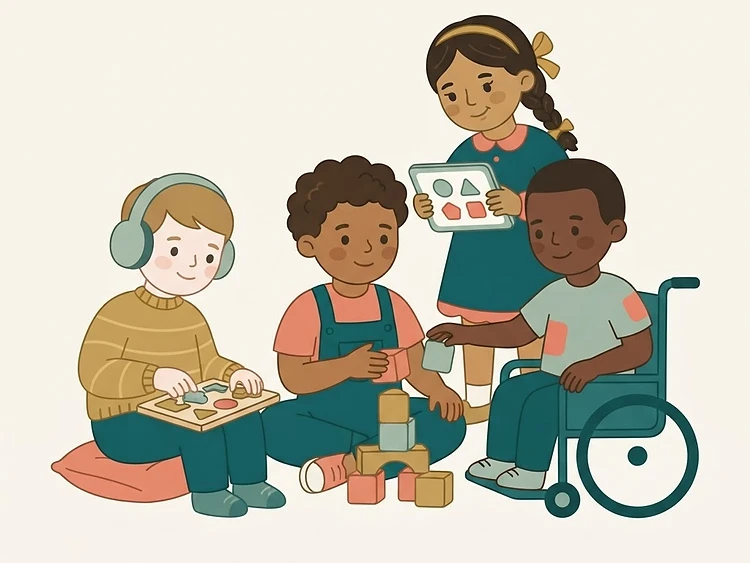
Children playing and learning together

Find the right game

Browse by category, age group or the skill you would like to practise.

Ready to play

0 games

The first BrainDiverse Play games are being built and tested right now. Everything listed below is in development — please check back soon.

In development

16 games

These games are not playable yet. They show what is coming next.

ADHD Games

Focus Finder

Spot the gently moving shapes among the leaves. No timer, no penalty — just one thing to look for at a time.

Ages 5–8About 5 min
  • Attention
  • Visual scanning
  • Concentration
Coming soon
ADHD Games

Memory Match Garden

Turn over pairs of friendly garden characters and remember where each one is hiding.

Ages 4–7About 6 min
  • Working memory
  • Concentration
  • Turn taking
Coming soon
ADHD Games

Plan the Path

Lay out the steps a character needs to reach the end of the garden, then watch it walk the route you built.

Ages 7–11About 8 min
  • Planning
  • Sequencing
  • Problem solving
Coming soon
ADHD Games

Tidy the Workshop

Sort tools and toys into the right boxes, one calm pile at a time.

Ages 6–10About 7 min
  • Organisation
  • Sorting
  • Task completion
Coming soon
Autism-Friendly Games

Feelings Faces

Meet characters showing happy, sad, worried and calm faces, and choose the name that fits.

Ages 4–8About 5 min
  • Emotion recognition
  • Naming feelings
  • Facial cues
Coming soon
Autism-Friendly Games

What Happens Next?

Everyday scenes — a bus ride, a haircut, a birthday — with a clear, predictable order of events.

Ages 5–9About 6 min
  • Everyday situations
  • Predicting
  • Routines
Coming soon
Autism-Friendly Games

Conversation Cards

Simple back-and-forth prompts with a friendly character, so turn taking feels safe and unhurried.

Ages 7–12About 8 min
  • Communication
  • Turn taking
  • Listening
Coming soon
Autism-Friendly Games

My Calm Choices

Practise choosing what helps when something feels too much — a break, headphones, a quiet space.
Ages 5–10About 5 min
  • Self-advocacy
  • Choice making
  • Emotional awareness
Coming soon
Coordination Games

Step and Tap

Follow a short, repeating pattern of steps and taps at whatever pace suits you.

Ages 4–8About 5 min
  • Sequencing
  • Motor planning
  • Rhythm
Coming soon
Coordination Games

Trace the Trail

Guide a finger or a cursor along winding paths to help a character find its way home.

Ages 5–9About 6 min
  • Visual-motor
  • Hand-eye coordination
  • Control
Coming soon
Coordination Games

Balloon Balance

Keep a soft balloon in the air with slow, steady movements. No rush and no score.

Ages 6–10About 5 min
  • Balance
  • Coordination
  • Body awareness
Coming soon
Coordination Games

Copy My Moves

A friendly character shows one simple movement at a time, and you copy it back.

Ages 5–9About 6 min
  • Motor imitation
  • Body awareness
  • Sequencing
Coming soon
Calm and Regulation Games

Balloon Breathing

Breathe in as the balloon grows and out as it floats away. A slow, guided rhythm to settle with.

Ages 3–8About 3 min
  • Breathing
  • Self-regulation
  • Relaxation
Coming soon
Calm and Regulation Games

Weather Inside

Choose the weather that matches how you feel today, and hear what might help.

Ages 5–10About 5 min
  • Emotional awareness
  • Naming feelings
  • Self-regulation
Coming soon
Calm and Regulation Games

Slow and Still

Gentle, quiet activities that help the body slow down — stretching, noticing and resting.

Ages 4–9About 4 min
  • Relaxation
  • Body awareness
  • Focus
Coming soon
Calm and Regulation Games

My Calm Corner

Build a quiet space of your own with the sounds, colours and textures that help you feel settled.

Ages 5–11About 6 min
  • Self-regulation
  • Sensory awareness
  • Choice making
Coming soon
For grown-ups

Information for parents and educators

For parents and carers

  • •Sit alongside your child the first time, then let them take the lead.
  • •Short sessions work best — around ten minutes, then a break.
  • •Praise the effort rather than the score.
  • •If a game feels frustrating, stop and come back another day.

For educators and therapists

  • •Games are grouped by the skill being practised, so you can match them to a target.
  • •Use them as a calm starter activity or a regulation break between lessons.
  • •Nothing needs signing up for — open the page and play.
  • •Clear age ranges and durations make it easy to plan a session.

How we keep this space safe

  • •No advertising of any kind on BrainDiverse Play.
  • •No child accounts, and no personal details are collected from children.
  • •No progress tracking and no scores stored about a child.
  • •Designed to be calm: no flashing imagery, no sudden loud sounds and no pressure to be fast.
Also from Braindiverse

Parent toolkits

Practical, printable guidance for ADHD, autism, DCD, tic disorders and FASD — written for families preparing for assessment and support.

View parent toolkits