Neurodevelopmental training and toolkits for families and professionals
Braindiverse Academy turns clinical knowledge about ADHD, autism, DCD (dyspraxia), tic disorders and FASD into practical help for everyday life. Our clinician-led toolkits, guides and webinars help you understand assessments, prepare for appointments and support children at home, at school and in clinic.
- ✓Parents and carers: understand the assessment process and get support while you wait.
- ✓Teachers and schools: classroom strategies for children with ADHD, autism, DCD and tics.
- ✓Clinicians and therapists: assessment toolkits and training in the safe, ethical use of AI.
Dr. Inyang Takon · MBBS · FRCPCH · FWACP · MSc Clinical Neuropsychiatry

Mission
"Breaking down complex neuroscience into formats easily understood by parents and professionals."


Dr. Inyang Takon MBBS · FRCPCH · FWACP
Dr. Takon is a Consultant Neurodevelopmental Paediatrician with over 22 years as a substantive NHS Consultant and 15 years in independent practice. She is one of a very small number of clinicians uniquely positioned at the intersection of frontline clinical practice, medical education, and responsible AI innovation.
Her passion lies in breaking down complex neuroscience into language that parents, teachers, and professionals can genuinely understand and act upon — without losing the clinical precision that comes from decades at the bedside.
"The bridge between neurodevelopmental science and everyday impact — in schools, clinics, and homes."
Clinical Specialisms
Qualifications & Roles
- Fellow, Royal College of Paediatrics & Child Health (FRCPCH)
- MSc Clinical Neuropsychiatry — University of Birmingham
- PG Cert Medical Education — University of Dundee
- NICE Quality Standards Contributor — FASD Guidance, 2022
- AI Ambassador — AI Adoption in Healthcare Network
- Host — Early Intervention Matters Podcast & YouTube
Training Programmes
Every programme is grounded in 22+ years of NHS clinical practice — translated into clear, actionable learning for the people who need it most.
Understanding Neurodevelopmental Conditions in the Classroom
Empowering teachers to support every learner
Half-day · Full-day · Multi-session
In-person · Virtual · Hybrid
A comprehensive programme equipping school staff with the knowledge to identify, understand, and practically support children with ADHD, autism, FASD, and related conditions — reducing exclusions and improving outcomes.
Learning Outcomes
- Recognise signs of ADHD, autism, and FASD in school-aged children
- Understand the neuroscience behind behaviour and learning differences
- Apply evidence-based strategies in the classroom, immediately
- Navigate EHCP and support plan processes with confidence
Clinical Neurodevelopmental Knowledge for Allied Health
Deepening your clinical lens
Half-day · Full-day
In-person · Virtual
Designed for speech and language therapists, occupational therapists, clinical psychologists, and counsellors who work alongside neurodevelopmental presentations — building clinical depth and joined-up care.
Learning Outcomes
- Understand the neurological basis of neurodevelopmental conditions
- Improve differential recognition across overlapping presentations
- Integrate neurodevelopmental understanding into therapeutic practice
- Communicate findings effectively to families and other professionals
Making Sense of Your Child's Brain
Complex neuroscience, made human
Workshop · Series
In-person · Online
A warm, accessible programme helping parents and carers understand their child's diagnosis — translating clinical language into practical wisdom for daily life, school navigation, and emotional wellbeing.
Learning Outcomes
- Understand what ADHD, autism, or FASD actually means for your child
- Move from confusion to confident advocacy
- Learn strategies that work at home and in school
- Feel less alone in your journey
Neurodevelopmental Disorders — Clinical Updates & Case Learning
Evidence-based, practically applied
Half-day · Full-day · Grand Round
In-person · Virtual
For GPs, paediatricians, nurses, and other clinicians — structured CPD on current assessment pathways, diagnosis, management, and the latest evidence across ADHD, autism, FASD, and developmental delay.
Learning Outcomes
- Understand updated NICE and SIGN guidance on neurodevelopmental conditions
- Sharpen clinical assessment and referral decision-making
- Manage complex presentations with greater confidence
- Discuss cases in a supportive, expert-facilitated environment
Clinical Paediatric Support for Residential and Specialist Schools
Children living or learning away from home can benefit from coordinated support that connects their health needs with everyday life at school. Dr Inyang Takon is a Consultant Neurodevelopmental Paediatrician with more than 22 years of NHS and international clinical experience, providing paediatric input to residential schools and specialist settings.
For children living away from home, Dr Takon works collaboratively with the school, family or carers, local GP and relevant professionals to support continuity of care and a shared understanding of each child's needs. Input is tailored to the child and setting.
Support can include
Coordinated paediatric input
Assessment & Clinical Advice
Neurodevelopmental assessment and clinical advice for children with ADHD, autism, FASD, tic disorders, developmental delay and co-occurring needs.
Guidance & Training for Staff
Practical guidance and training for education and residential-care staff, shaped around the children in your setting.
Liaison with Local GPs
Liaison with local GPs to support ongoing care, including ADHD medication management where clinically appropriate.
Trusted by Educators, Parents & Clinicians
The true measure of training is what people carry with them afterwards. Here is what attendees say about working with Dr. Takon.
22+
Years of Clinical Practice
1,000+
Professionals Trained
50+
Schools & Organisations
4.9★
Average Session Rating
Dr. Takon delivered a CPD session on ADHD that completely reframed how our teaching team approaches neurodiverse learners. Her ability to translate complex neuroscience into practical classroom strategies is genuinely remarkable. Every member of staff left with something they could use the next day.
Headteacher
Secondary School, Hertfordshire
We commissioned a bespoke training day for our entire school on ADHD and autism. The staff feedback was the best we have ever received for a CPD day. Dr. Takon pitched every session perfectly — from the teaching assistants to the senior leadership team. She understood our school before she even walked through the door.
Deputy Headteacher
Primary School, London
Our SENCO team was transformed by Dr. Takon's training. She doesn't just deliver content — she builds confidence. We are now far better placed to support neurodiverse pupils and to communicate effectively with their families.
SENCO Lead
Multi-Academy Trust Training Programme
I brought Dr. Takon in to train our pastoral staff on tic disorders and Tourette's. The clarity she brought to a subject that had baffled our team for years was extraordinary. Parents have since told us our school's response to their children changed overnight.
Assistant Principal
Secondary Academy, West Midlands
As a parent of a child recently diagnosed with autism, I had felt completely lost in medical jargon. Dr. Takon's session for parents was the first time someone explained my son's condition in a way that made sense. I finally feel equipped to advocate for him.
Parent
Parent Workshop Attendee
Dr. Takon spoke at our parent support group and stayed afterwards to answer every question with patience and warmth. She has a rare gift — she makes you feel heard while she teaches you. Several parents messaged me afterwards to say it had changed their entire outlook.
Parent Support Group Coordinator
Community Talk, Hertfordshire
I attended the FASD webinar not expecting much. I left with a complete shift in how I understood my daughter's behaviour over the last eight years. For the first time, things clicked into place. I wish I had found Dr. Takon's work years ago.
Parent & Carer
FASD Webinar Attendee
The handout guide on tic disorders was the first resource I have ever found that I could actually give to my child's teacher. It was clear, non-alarmist, and practical. Within a week the school had made three adjustments that made a real difference to our son's school day.
Parent
Tic Disorder Resources Guide
I attended Dr. Takon's workshop on FASD pathways and was struck by the depth of clinical knowledge combined with genuine accessibility. As a paediatrician, I rarely encounter CPD that is this well-pitched — clinically rigorous yet immediately applicable to practice.
Consultant Paediatrician
FASD Pathways Workshop
The bespoke session Dr. Takon ran for our therapy team on AI in clinical documentation was eye-opening. She showed us how to use these tools safely and ethically, which is exactly the reassurance clinicians need right now.
Speech & Language Therapist
Bespoke AI Training, NHS Trust
As an occupational therapist working with neurodiverse children, I found Dr. Takon's sensory processing training to be the most practically useful CPD I have completed in five years. She bridges the gap between clinic and classroom in a way that immediately changes what I do.
Occupational Therapist
Sensory Processing & Practice Workshop
Dr. Takon's podcast on early intervention is on my essential listening list for every trainee I supervise. She speaks with authority, warmth, and a refreshing lack of jargon. It is rare to find clinical expertise that is also genuinely compelling to listen to.
Clinical Psychologist
Early Intervention Matters Podcast
Testimonials reflect the views of individual attendees. Names have been generalised to preserve privacy.
Training Built Around Your Context
No two teams are the same. Bespoke training with Dr. Takon means the content, depth, and delivery are shaped entirely around your organisation, your people, and your specific challenges.
Clinically Grounded
Every session draws on 22+ years of NHS and independent practice — not textbooks.
Genuinely Accessible
Complex neuroscience translated into language your team can use on Monday morning.
AI-Informed Delivery
Where relevant, Dr. Takon integrates practical insights on AI tools in your professional context.
CPD-Eligible
Programmes can be designed to qualify for continuing professional development credits.
Inquiry Builder
Tell us about your needs
I am a...
I'm looking for training on...
For approximately...
Preferably delivered...
Support Braindiverse
Neuroscience should not be a privilege. By sponsoring or funding the Academy's work, organisations help put expert, clinically-grounded neurodevelopmental support into the hands of the families, schools, and professionals who need it most.
22+
Years of clinical practice
Open
Access resources & guides
Multi
Discipline partner network
UK-wide
Schools & organisations reached
Corporate Sponsorship
Partner your organisation with the Academy's training, resources, and outreach — supporting neurodiverse children, families, and the professionals who serve them.
- Named programme sponsorship
- Employee engagement & CPD
- Brand alignment with trusted clinical expertise
Trust & Grant Funding
Fund the development of open-access guides, the Waiting Well hub, and subsidised training for under-resourced schools and community settings.
- Open-access resource creation
- Subsidised school training
- Measurable impact reporting
Commissioned Programmes
Commission bespoke training packages, toolkits, or clinical-insight programmes tailored to your trust, locality, or workforce.
- Multi-academy trust packages
- Workforce development
- Bespoke clinical content
In-Kind & Pro Bono Support
Contribute professional expertise, platforms, or services that extend the Academy's reach — from clinical collaborators to media and technology partners.
- Clinical & academic collaboration
- Platform & media partnerships
- Resource co-production
Let's talk about partnership.
Whether you're a corporate sponsor, a charitable trust, or an organisation looking to commission training, we'd welcome a conversation about how your support can make a measurable difference.
AI in Healthcare — Responsibly Led
Dr. Takon is one of a very small number of clinicians who can bridge the gap between frontline neurodevelopmental paediatrics and the responsible adoption of artificial intelligence in healthcare — offering training that is grounded, practical, and ethically anchored.


AI in Healthcare Training
Practical, responsible AI education for clinicians — covering how AI tools work, where they can help, and how to adopt them safely within clinical practice.
AI for Educators
Understanding how artificial intelligence can support neurodiverse learners, personalise learning experiences, and reduce teacher workload — responsibly.
Clinical AI Applications
Dr. Takon has built clinician-led apps including FASD Compass, NeuroDx Assistant, and Calm Compass — demonstrating practical, safe AI deployment in paediatric care.
AI Credentials & Engagement
Certificate in AI in Healthcare — RCSI
AI Agent Certification — AI Innovision
AI Ambassador — AI Adoption in Healthcare Network
Lead Auditor — AI use among Neurodevelopmental Paediatricians
Invited Speaker — AI in Neurodevelopmental Paediatrics (Sept 2026)
Daily AI integration in clinical documentation & content workflows
AI for Parents & Carers
A parent's guide to using AI safely when you have questions about neurodiversity. AI can help you find words, understand general information, and prepare for conversations — it cannot assess your child, diagnose them, or keep them safe in a crisis.
AI can sometimes help with
- Explaining a term in everyday language
- Turning notes into a short list of questions
- Drafting a visual routine, social story or calm script
- Preparing for an appointment or school meeting
AI cannot safely do
- Diagnose autism, ADHD, or any health condition
- Decide on medication or treatment changes
- Judge a new, severe, or safety-related concern
- Replace a clinician, therapist or emergency service
Usually suitable for AI
General, low-risk questions where you need words, ideas or organisation.
Use AI, then verify
Questions about your child's support, a report, or a possible health issue.
Do not use AI alone
Anything urgent, rapidly worsening, or involving safety and treatment decisions.
A Parent's Guide to Using AI Safely
Download the complete guide — the safer way to ask an AI question, protecting your child's privacy, a Smart Visit Brief template for appointments, and when to stop typing and seek help.
NeuroAlign
A digital-literacy companion for parents of neurodivergent children — helping you understand assessments and reports, ask the right questions, and advocate confidently for your child. Available through subscription.
"AI can help you prepare. It cannot tell you who your child is."
Apps Built by a Clinician,
for Those Who Serve
Dr. Takon has designed and deployed practical clinical and family-support tools — demonstrating that AI, when guided by frontline expertise, can genuinely improve care and clarity.
Repetitive-behaviour insights, made meaningful
A clinician-designed tool that helps families and practitioners track and interpret repetitive behaviours and tics — turning everyday observations into clearer patterns that inform support and care decisions.
Tidytics
Repetitive-behaviour insights, made meaningful
All apps are designed and clinically overseen by Dr. Takon. Availability and access may vary — enquire for current status and pilot opportunities.
Play. Learn. Grow.
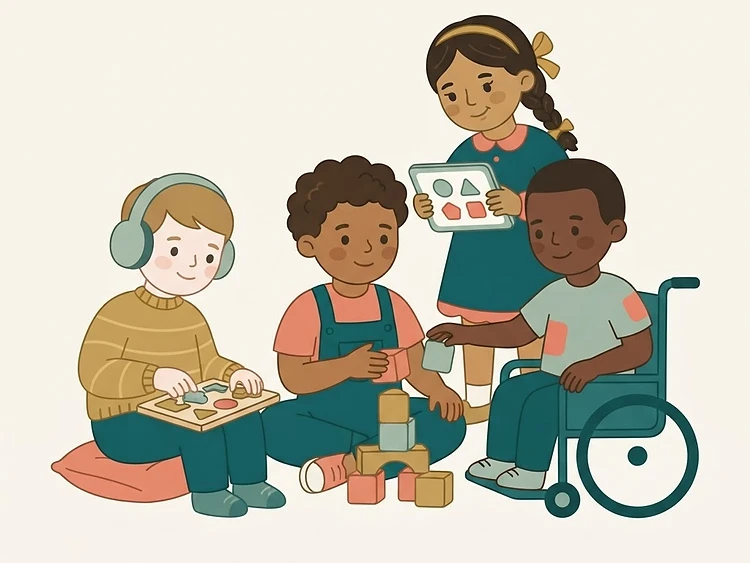
A calm, welcoming games hub for neurodivergent children — short, low-stimulation games built around attention, communication, coordination and regulation.
- ADHD Games
- Autism-Friendly Games
- Coordination Games
- Calm and Regulation Games

Keynotes & Speaking Engagements
Dr. Takon speaks on neurodevelopmental conditions and the responsible adoption of AI in healthcare — bringing 22+ years of clinical authority to conferences, universities, and professional forums.
Overwhelm to Opportunity: Harnessing AI in ADHD Management
National ADHD Masterclass — September 2026
Beyond ADHD: Recognising FASD in Paediatric Practice
National ADHD Masterclass, London — September 2026
Understanding ADHD for Inclusive EdTech Design
University of Lagos, Nigeria — 29 September 2026
Early Intervention in Neurodevelopmental Conditions
National Paediatric Conference
AI Adoption in Healthcare — A Clinician's Perspective
AI in Healthcare Network
FASD: Pathways to Diagnosis and Support
Royal College of Paediatrics
Breaking Down Neuroscience for Educators
University of Hertfordshire
Neurodiversity in the Classroom
SEN Education Forum
Conferences · Universities · Corporate events · Professional forums
Events & Speaking Calendar
Upcoming workshops, webinars, conference talks, and training sessions — for educators, clinicians, and professionals. Click a date to see what's on, or filter by event type.
September 2026
ADHD in the Classroom: Practical Adjustments
A practical workshop for teachers and SENCOs — sensory considerations, task scaffolding, and whole-class strategies that support attention without singling children out.
Invite Dr. Takon to speak
Conferences, inset days, trust training, and parent talks — tailored to your audience and setting.
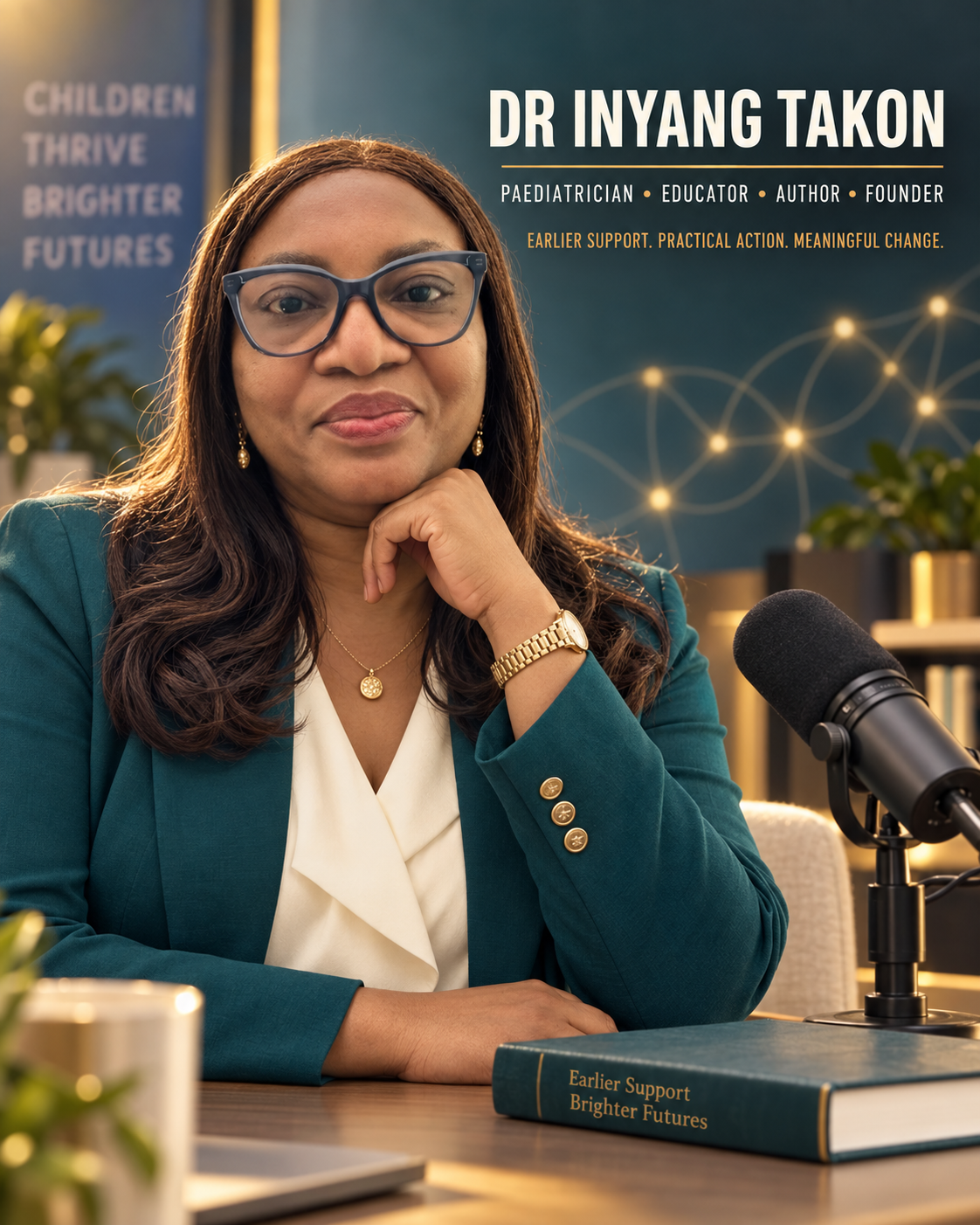
Conversations That Help Audiences Act Earlier
Available for interviews, keynote talks, panels and educational sessions — with topics shaped around your audience.
Dr Inyang Takon is a Senior Consultant Neurodevelopmental Paediatrician with more than 20 years of experience supporting children, young people and families affected by neurodevelopmental conditions. She translates specialist knowledge into clear, practical conversations for parents, professionals and wider audiences.
Her interests include early support, culturally informed care and inequalities in access to assessment and intervention, particularly within African, Black and minority ethnic communities. Through her clinical work and Early Intervention Matters, she champions support that responds to a child's needs, including while families wait for a diagnosis.
- —Clinical depth from more than two decades of practice.
- —Clear explanations of complex topics.
- —A practical focus on families, schools and services.
- —A culturally informed perspective on access and inclusion.
Signature Speaking & Media Topics
Supporting children before diagnosis
Practical steps for families and professionals during the wait for assessment.
Understanding ADHD beyond the label
Everyday needs, co-occurring difficulties and common parental questions.
Autism and the individual child
Moving from a diagnosis to an understanding of strengths and support needs.
Girls and overlooked neurodevelopmental needs
Masking, less recognised presentations and why difficulties can be missed.
ADHD medication and family concerns
Clear conversations about treatment questions and shared decision-making.
Helping neurodivergent children thrive at school
Recognising needs and strengthening collaboration between families and educators.
Culture and equitable access to support
Addressing barriers to understanding, assessment and early intervention.
Growing up with neurodevelopmental differences
Preparing young people and families for transitions into adult life and services.
www.drtakon.it.com
Book a talk or interview ↗Early Intervention Matterswww.drtakon.com
Explore the education platform ↗UK-based · Available for UK and international virtual engagements
Partner Professionals
Braindiverse Academy collaborates with trusted clinicians, therapists, and educators — each bringing deep, specialist expertise. Together, they share practical resources you can draw on between appointments, grounded in real clinical and classroom experience.
Dr. Amara Okafor
DClinPsy, AFBPsS
Clinical Psychologist
Cognitive Behavioural Therapy · Anxiety & Autism
Works alongside families and schools to adapt CBT for neurodiverse children and young people, with a focus on anxiety, emotional regulation, and self-esteem.
James Whitfield
BSc (Hons), MRCSLT
Speech & Language Therapist
Developmental Language Disorder · Social Communication
Supports children with complex communication needs and collaborates with educators to build language-rich, inclusive classrooms.
Dr. Priya Nair
MSc, HCPC registered
Occupational Therapist
Sensory Integration · Motor Coordination
Specialises in sensory processing differences and DCD, helping families and schools translate assessment findings into practical, everyday adjustments.
Sarah Lindqvist
PGCE, NPQSL, SENCO
SENCO & Education Consultant
Whole-School SEND Strategy · Inclusion
Advises school trusts on building sustainable, evidence-led provision for neurodiverse learners across mainstream and specialist settings.
Dr. Michael Adeyemi
MBBS, MRCPsych
Child & Adolescent Psychiatrist
ADHD · Co-occurring Mental Health
Brings a medical perspective to complex presentations, supporting integrated care pathways for children with ADHD and co-occurring conditions.
Dr. Helen Crosse
PhD, CPsychol
Educational Psychologist
Learning Assessment · Cognitive Profiles
Conducts detailed cognitive assessments and translates findings into actionable, strength-based strategies for educators and families.
Interested in joining the network?
Dr. Takon partners with clinicians, therapists, and educators who share a commitment to accessible, evidence-led neurodevelopmental support.
Books & Publications
Dr. Takon brings the same clarity she brings to her training into the written word — authored and co-authored books that make neurodevelopmental understanding accessible to families, educators, and clinicians alike.
Clinic to Calling
A reflective journey from the bedside of clinical practice to a broader calling — helping professionals find purpose beyond the clinic walls.
Let's Talk About Tics
A clear, compassionate guide to tic disorders — helping families, educators, and clinicians understand, recognise, and respond with confidence.
The Doctor Podcaster
A practical handbook for clinicians and professionals who want to share their expertise through podcasting — with purpose, clarity, and reach.
Missed, Misread, and Misdiagnosed
An exploration of the neurodevelopmental conditions that slip through the cracks — and what clinicians, educators, and families can do to close the gap.
ADHD Tics and Me
A lived-experience-led book helping children and families make sense of ADHD and tics together — written with warmth, honesty, and clinical insight.
Brighter Days, Better Nights
A sleep-focused guide for families of neurodiverse children — building gentler routines for restful nights and brighter, more regulated days.
More than Behaviour
A book that looks beneath behaviour to the needs, signals, and unspoken stories behind it — reframing how adults respond to neurodiverse children.
Titles marked In Press are forthcoming. Enquire for publication dates, pre-orders, or bulk orders for schools and organisations.
Neuroscience & AI Glossary
Clear, jargon-free definitions of the terms you'll meet in reports, appointments, school meetings, and AI tools. Understanding the words — whether clinical or technological — is the first step to confident advocacy.
Executive function
NeuroscienceThe mental skills that help us plan, focus attention, remember instructions, and manage impulses. Often affected in ADHD and other neurodevelopmental conditions.
Sensory processing
NeuroscienceHow the brain receives and responds to information from the senses. Differences can make some environments overwhelming or under-stimulating.
EHCP
NeuroscienceEducation, Health and Care Plan — a legal document in England setting out a child's special educational needs and the support they must receive.
SENCO
NeuroscienceSpecial Educational Needs Coordinator — the teacher in a school responsible for arranging support for children with additional needs.
Neurodiversity
NeuroscienceThe natural variation in how brains work and learn. It frames differences like ADHD and autism as part of human variation rather than defects.
Reasonable adjustments
NeuroscienceChanges a school or service must make so a child with additional needs can access learning and activities on the same basis as their peers.
Meltdown
NeuroscienceAn overwhelmed response to sensory or cognitive load. It is not a behavioural choice and settles when the child feels safe and regulated.
Stimming
NeuroscienceSelf-stimulatory behaviour — repetitive movement or sound that helps with regulation, focus, or sensory needs. Common and often beneficial.
Comorbid
NeuroscienceWhen two or more conditions occur together — for example, ADHD and autism often co-occur.
Tic
NeuroscienceA sudden, involuntary movement or sound. Tics can be motor (movement) or vocal, and fluctuate with stress, fatigue, and excitement.
Dyspraxia (DCD)
NeuroscienceDevelopmental Coordination Disorder — difficulty with motor coordination that affects everyday tasks, handwriting, and organisation.
FASD
NeuroscienceFetal Alcohol Spectrum Disorder — a lifelong neurodevelopmental condition caused by prenatal alcohol exposure, affecting learning, memory, and behaviour.
Artificial Intelligence (AI)
AIComputer systems designed to perform tasks that normally require human intelligence — like recognising patterns, understanding language, or making recommendations. AI does not 'think' like a human; it follows learned rules from large amounts of data.
Machine Learning
AIA type of AI where computers learn patterns from data instead of being explicitly programmed. The more data it sees, the better it gets — but it can also learn the wrong things if the data is flawed.
Large Language Model (LLM)
AIAn AI system trained on vast amounts of text to generate human-like language. ChatGPT and similar tools are LLMs. They predict likely next words — they don't truly 'understand' what they say.
Hallucination (AI)
AIWhen an AI system confidently produces information that is incorrect or fabricated. AI doesn't know what's true — it generates plausible-sounding text that may be wrong, which is why human checking matters.
Training Data
AIThe information used to teach an AI system. If the training data is limited or biased, the AI's outputs will reflect those gaps — which is a real concern in healthcare where diversity matters.
Algorithm
AIA set of step-by-step instructions a computer follows to solve a problem or make a decision. In healthcare, algorithms might flag risk or suggest next steps — but they should support, not replace, clinical judgement.
Bias (in AI)
AIWhen an AI system produces unfair or skewed results because its training data or design doesn't represent everyone equally. This can lead to under-diagnosis in groups the AI wasn't trained on.
Generative AI
AIAI that creates new content — text, images, or audio — based on patterns it learned. Useful for drafting and summarising, but outputs should always be checked by a qualified person before use in decisions about a child.
Prompt
AIThe instruction or question you give an AI tool. Clearer, more specific prompts tend to produce more useful responses — a skill sometimes called 'prompt engineering.'
Natural Language Processing (NLP)
AIA branch of AI focused on understanding and generating human language. It powers tools like chatbots and voice assistants — and is increasingly used to summarise medical notes or translate clinical reports.
AI Safety
AIThe field of ensuring AI systems behave reliably and don't cause harm. In healthcare, this means AI should be transparent, tested, and used alongside — never instead of — professional clinical judgement.
Paid Toolkits & Practical Resource Packs
Professionally designed, evidence-informed toolkits for educators, clinicians and families. Each pack includes ready-to-use templates, structured frameworks and practical strategies.
ADHD Classroom Strategies Toolkit
A practical pack of evidence-based classroom strategies, differentiation templates and quick-reference guides for supporting children with ADHD in mainstream settings.
- 40+ classroom strategy cards
- Differentiation planning templates
- Behaviour support flowcharts
- Parent–teacher communication forms
Not yet available to download. Register your interest and we'll let you know when this pack is released.
Sensory Regulation Parent Workbook
A guided workbook helping families understand sensory processing differences, identify triggers and build personalised regulation routines at home.
- Sensory profile assessment
- Daily regulation routine builder
- Environment adaptation checklist
- Printable calming strategy cards
Not yet available to download. Register your interest and we'll let you know when this pack is released.
Tic Disorder Assessment & Support Pack
A clinical support pack with structured assessment frameworks, psychoeducation materials and family-facing guidance for tic disorders and Tourette syndrome.
- Structured assessment framework
- Psychoeducation handouts for families
- School liaison letter templates
- Co-occurring condition screening guide
Not yet available to download. Register your interest and we'll let you know when this pack is released.
FASD Family Support Toolkit
A practical, strengths-based guide for parents, kinship carers, foster carers and adoptive parents supporting a child or young person with FASD or prenatal alcohol exposure — England-focused education and advocacy.
- Strengths-based brain profile understanding
- Sensory, regulation & communication planning
- England EHCP & advocacy guidance
- Day-to-day adaptive living strategies
Not yet available to download. Register your interest and we'll let you know when this pack is released.
DCD Motor Skills Development Kit
A structured motor-skills development kit with progressive activity plans, tracking tools and school–home collaboration resources for Developmental Coordination Disorder.
- 12-week progressive activity plans
- Motor skill tracking spreadsheets
- Home–school collaboration forms
- Equipment adaptation guide
Not yet available to download. Register your interest and we'll let you know when this pack is released.
The Racing Brain Toolkit
A warm, practical post-diagnosis guide for families — an illustrated story to share with your child, gentle science for grown-ups, and printable plans for home and school. For children aged 6–10 and their grown-ups.
- "Max and His Racing Brain" — illustrated story for your child
- Plain-language guide to the diagnosis & the six-step conversation
- Evidence-based, non-pharmacological strategies for home
- The Home Tune-Up & Classroom Tune-Up printable posters
Not yet available to download. Register your interest and we'll let you know when this pack is released.
Autism Transition to Adulthood Planner
A structured England-focused planning toolkit supporting autistic young people through the gradual transition to adulthood — making space for strengths, sensory and communication preferences, aspirations and the practical help that makes participation possible.
- Preparation, choice, access & coordinated action framework
- Transition timeline for ages 13–25
- Sensory, communication & recovery planning
- Education, employment & adult services navigation
Not yet available to download. Register your interest and we'll let you know when this pack is released.
All packs are digital downloads · Released as each one is completed
Digital Resources
Practical, clinically-grounded materials you can use today — guides, the Early Intervention Matters podcast, webinars, and toolkits. All written or curated by Dr. Takon to make complex neuroscience genuinely accessible.
Understanding Neurodiversity — share with parent groups, schools and clinics
Guides & Toolkits
In-depth written guides, explored topic by topic.
Explore →▸Webinars
On-demand sessions with real Q&A and practical takeaways.
Explore →✦Video Series
Short, focused episodes from Early Intervention Matters.
Explore →Waiting Well
Practical, condition-specific guidance for families in the space between referral and assessment — for ADHD, ASD, DCD, tic disorders, and FASD. Support can begin now, based on the difficulties your child has today.
Preparing for Your Child's ADHD Assessment
A practical 25-page parent toolkit from first concerns to referral and assessment — free during the parent trial.
Preparing for Your Child's Autism Assessment
Explore →Preparing for Your Child's DCD Assessment
Explore →Preparing for Your Child's Tic Disorder Assessment
Explore →FASD Family Support Toolkit
Explore →Tidytics
A clinician-designed tool that helps families and practitioners track and interpret repetitive behaviours and tics — turning everyday observations into clearer patterns that inform support and care decisions.
Calm Compass
A supportive companion app for parents and carers of neurodiverse children — offering grounded, clinically-informed strategies during moments of overwhelm, drawn from years of paediatric practice.
DreamGuide
A sleep-support app tailored to neurodiverse children and their families — combining clinically-informed sleep hygiene guidance with gentle, structured routines to build restful, sustainable nights.
Ask a Developmental Paediatrician
Real questions from parents, carers, and educators — answered by Dr. Inyang Takon. A space for the everyday concerns families carry between clinic appointments.
Understanding ADHD: A Parent's Starter Guide
A clear, jargon-free introduction to ADHD for families newly navigating the condition — covering signs, assessment, and practical support at home.
Supporting Children/Young People with ASD in the Classroom
Practical strategies for teachers and SENCOs — sensory considerations, communication approaches, and whole-class adjustments that genuinely work.
Early Intervention Matters
Hosted by Dr. Inyang Takon, Consultant Neurodevelopmental Paediatrician — a weekly series exploring why early recognition of neurodevelopmental conditions changes lives, through conversations with clinicians, educators, and families.
AI in Healthcare: A Clinician's Honest View
An on-demand webinar addressing what AI can and cannot do in clinical practice — recorded live, with Q&A from frontline professionals.
FASD: Why Diagnosis So Often Misses
A long-form article unpacking the barriers to FASD recognition and what clinicians and educators can do to close the gap.
Sensory Profile Worksheet
A printable toolkit to help parents and educators map a child's sensory responses across environments and identify supportive adjustments.
What Is ADHD, Really?
A clear breakdown of how ADHD presents across age and context — and why it's so often misunderstood.
Sensory-Friendly Classrooms
Practical adjustments teachers can make today to support neurodiverse pupils without disrupting the whole class.
Meltdowns vs Tantrums
Understanding the difference and responding in a way that calms rather than escalates.
FASD: The Hidden Diagnosis
Why fetal alcohol spectrum disorder goes unrecognised — and what clinicians should look for first.
Can AI Help Diagnose Autism?
An honest look at where AI is genuinely useful in assessment — and where it absolutely should not lead.
Tics and Tourette's: The Basics
What tics are, how they differ from habits, and when to seek specialist support.
More episodes on the Dr. Inyang Takon YouTube channel.
Need a resource tailored to your setting?
Bespoke guides, toolkits, and training materials can be commissioned for your school, trust, or organisation.
From the Journal
Longer-form writing from Dr. Takon — on early intervention, assessment, AI in healthcare, and the everyday realities of neurodiverse family life. Read in full on Substack.
Why Early Recognition Changes Lives
How spotting neurodevelopmental differences early shifts a child's trajectory — and what families and schools can do while they wait for assessment.
Sep 2026 · 6 min read
The Assessment Gap: What Happens Between Referral and Diagnosis
A candid look at the waiting period, why it's so hard, and how to use it well rather than simply endure it.
AI in the Clinic: Where It Helps, Where It Must Not Lead
An honest clinician's view on artificial intelligence in assessment — the genuine uses, and the lines we should not cross.
FASD: The Diagnosis That Keeps Being Missed
Unpacking the barriers to Fetal Alcohol Spectrum Disorder recognition, and what frontline clinicians can change tomorrow.
Meltdowns Are Not Tantrums: A Parent's Guide
Understanding the difference, and responding in a way that calms rather than escalates — for everyone's sake.
Sensory-Friendly Classrooms Without Singling Anyone Out
Whole-class adjustments that benefit neurodiverse learners and quietly improve the room for everyone.
Frequently Asked Questions
Plain answers to the questions families and educators ask most — about referrals, assessments, school support, and everyday life with neurodiverse children.
Speak with your GP, health visitor, or school SENCO. They can refer your child to a paediatrician or child development service. Bring any notes on behaviour, sleep, learning, and daily life — the more concrete, the better.
Bring school reports, any existing letters from professionals, a list of your observations across settings (home, school, social), and questions you want to ask. A short diary of the previous two weeks is often very helpful.
Schools must make reasonable adjustments for neurodiverse children. Support may include a SEN Support plan or, where needs are significant, an Education, Health and Care Plan (EHCP). Ask the SENCO about the graduated approach.
Waiting times vary widely by area and demand. While you wait, the Waiting Well guides on this site offer condition-specific, practical support you can begin using today — support does not have to wait for a diagnosis.
No. Support should be based on a child's needs, not solely on a label. Teachers, families, and clinicians can put helpful strategies in place using the presenting difficulties alone.
A tantrum is usually goal-directed and stops when the goal is met. A meltdown is an overwhelmed response to sensory or cognitive load and is not under the child's control — it subsides when the child feels safe and regulated.
Screens do not cause neurodevelopmental conditions, though they can affect sleep and attention. The underlying differences are neurodevelopmental. Balanced screen use and good sleep hygiene help, but are not a substitute for proper assessment and support.
Use honest, age-appropriate language that frames differences as just one part of who they are. Many children feel relief at understanding themselves. The glossary on this site can help you find plain-English words for the terms you encounter.
Have a question that isn't here? Ask Dr. Takon directly.